EU Fuel Crisis Road Freight 2026: How Cross-Border Diesel Chaos Is Breaking European Transport Corridors
EU fuel crisis hits road freight hard in 2026. Cross-border tank tourism, Slovakia's illegal diesel restrictions, Polish carrier job cuts, and IRU's emergency demands explained.

Logifie Team
Logistics Technology Experts

The March 2026 EU fuel crisis road freight 2026 story is no longer about expensive fuel alone. Operators are now dealing with cross-border supply imbalances, discriminatory emergency rules, and margin pressure severe enough to suspend services.
EU Fuel Crisis Road Freight 2026: How Cross-Border Diesel Chaos Is Breaking European Transport Corridors
Europe's road freight sector is facing a fast-moving diesel shock that now shapes route planning, contract negotiations, and daily operations across the continent's busiest lanes.
What makes this cycle different is the combination of pump-price inflation, cross-border tank tourism, and state interventions that are rewriting how carriers use fuel intelligence in day-to-day corridor management.
+30-35%
IRU statements in March 2026 described diesel prices across Europe rising roughly thirty to thirty-five percent within weeks.
1-3%
Many European road freight operators entered the crisis with net margins too thin to absorb a sustained fuel spike.
What Happened: A Fuel Shock Turned Into a Central European Corridor Problem
The immediate trigger was disruption around the Strait of Hormuz, where the late-February conflict shock squeezed crude availability and pushed Brent toward USD 100 per barrel. That turned a global oil event into a local transport budgeting crisis.
According to IRU briefings on the fuel market shock , diesel prices at European pumps rose fast enough to outrun most fuel surcharge formulas, leaving carriers exposed before contracts could catch up.
The destabilising second-order effect was tank tourism: German drivers crossed into Poland to save EUR 0.50-EUR 0.60 per litre, then Polish drivers moved south toward Slovakia, creating a rolling supply drain across the same corridors that shippers already use for time-critical freight.
A border-region refuelling strategy that worked in Q4 2025 can now fail in a single week. When queues, limits, and emergency checks stack together, scheduled stops stop being reliable even if the lane itself remains open.
Slovakia's Emergency Diesel Rules Exposed the Legal and Operational Limits
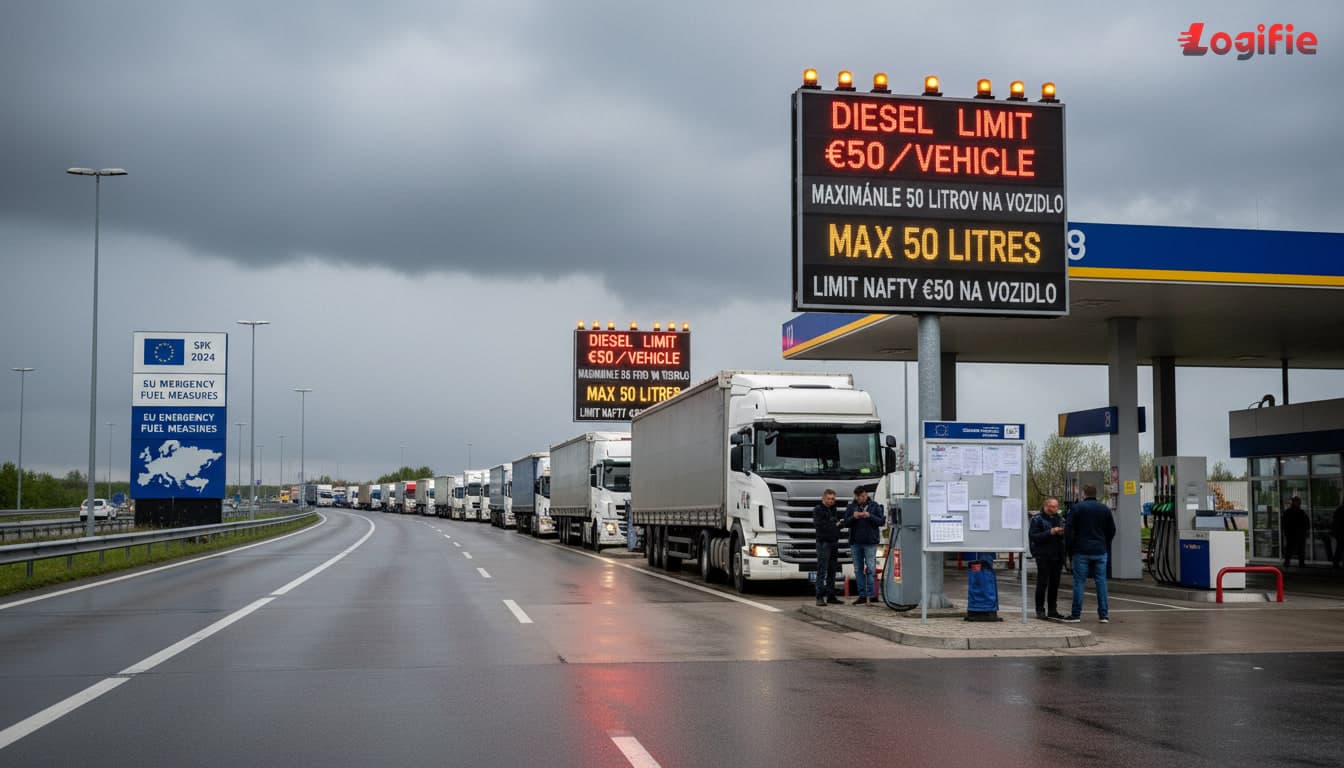
Slovakia responded to incoming fuel demand with a set of emergency measures that attempted to shield domestic supply from foreign demand. The package included higher diesel prices for foreign-registered vehicles, portable-container limits, and caps on how much each vehicle could spend at one visit.
- Dual pricing for foreign trucks - stations could benchmark non-domestic diesel prices against neighbouring countries.
- Portable container limit - operators were limited to the vehicle tank plus a maximum of 10 litres in approved canisters.
- Per-visit spend cap - diesel purchases were capped at EUR 400 for each vehicle during the emergency window.
"The dual-pricing element is highly discriminatory and against EU law."
- European Commission, March 24, 2026
That ruling matters because it confirms that a fuel emergency still cannot override the single-market principle. For carriers, however, the legal win did not remove the immediate operational reality: volume limits, drained supply, and delayed ETA commitments remained.
EUR 400
The emergency rules limited the value of diesel that could be bought in a single visit.
EUR 0.50-0.60/L
That price difference was large enough to justify deliberate cross-border refuelling detours for both private and commercial vehicles.
| Metric | Figure | Why it matters for freight |
|---|---|---|
| EU diesel increase since late February | 30-35% | Rapid cost inflation breaks monthly surcharge cycles. |
| Fuel share of operator cost base | ~33% | Fuel is too large a line item to absorb without repricing. |
| Typical carrier margin | 1-3% | Small cost gaps can erase profitability within days. |
| Slovakia emergency portable limit | 10L | Stops contingency refuelling beyond the main tank. |
| IEA reserve release | 400M barrels | Relief exists, but contract pass-through still lags pump reality. |
Tank Tourism Is Now a Freight Reliability Problem, Not Just a Consumer Story
A truck that can save EUR 250-EUR 300 per fill by crossing a border has a powerful incentive to detour. The problem is that thousands of drivers making that same decision create queue risk at the exact stations where freight plans expect quick turnaround.
German customs checks, local shortages in western Poland, and changing volume rules in Slovakia all introduce uncertainty that route engines cannot solve alone. Teams that pair corridor planning with real-time shipment tracking can react faster, but they still need alternative fuel-stop plans and more conservative booking buffers.
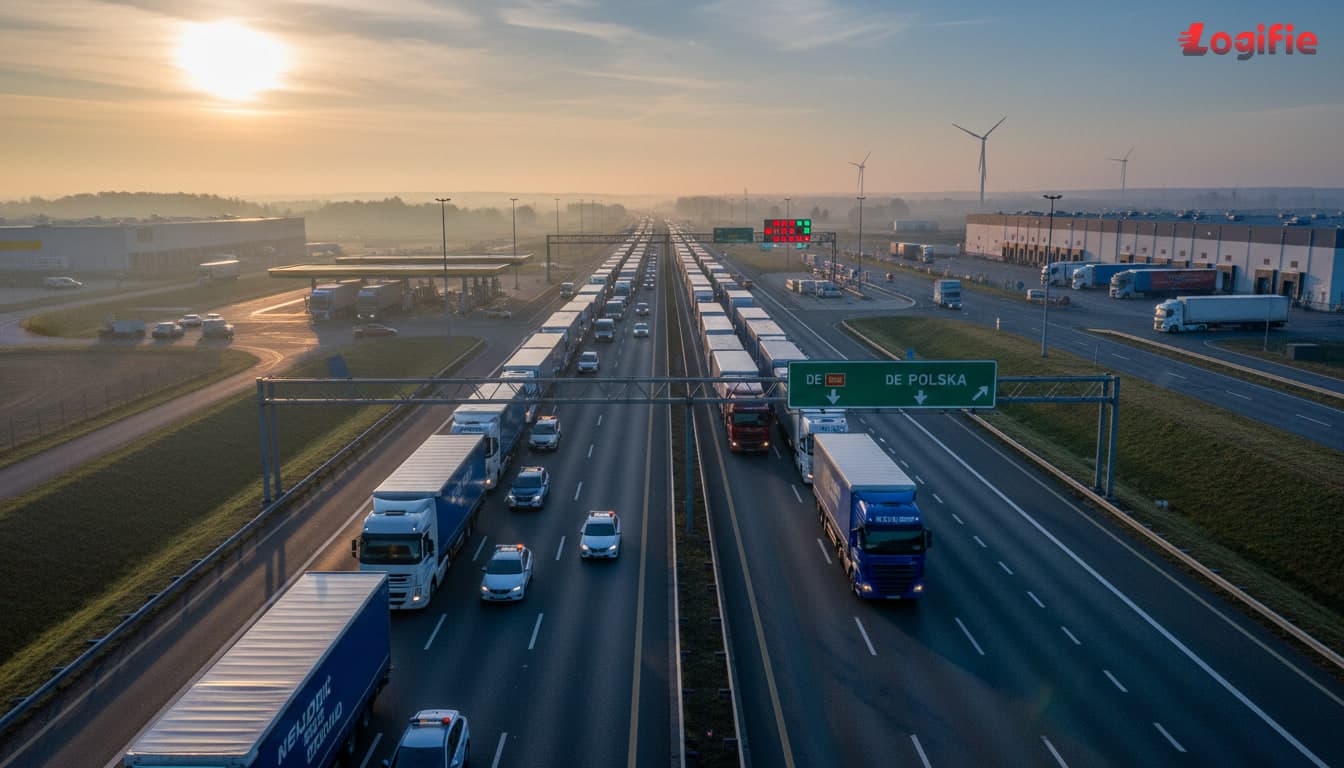
When refuelling stops become unreliable, the downstream effect is not just higher cost. It is missed loading slots, longer border dwell, and a higher probability that fragile just-in-time plans fail on arrival.
Corridors Under the Most Pressure
- Germany-Poland - price arbitrage plus border checks make this the clearest tank-tourism hotspot.
- Poland-Slovakia - shifting fuel demand meets emergency restrictions and uncertain station availability.
- Germany-Czech Republic and wider Central Europe - carriers increasingly need alternate fuelling logic when the primary border corridor clogs.
Operational teams should align fuel decisions with public holiday calendars as well. Holiday traffic, truck bans, and weekend retail demand can amplify the same station bottlenecks that the fuel crisis already created.
Polish Carriers Are Showing What the Margin Compression Looks Like in Practice
Poland sits at the center of European cross-border trucking, so its carriers are a useful early warning signal. Reports from trans.info describe fleets cutting jobs, suspending services, and seeking emergency policy support because fuel inflation is moving faster than contract repricing.
This is where the crisis becomes strategic for shippers. If carriers with thin balance sheets exit the market, a short-lived fuel spike turns into a capacity squeeze that outlasts the commodity shock itself. That is especially dangerous on lanes where spot capacity was already fragile.
~33%
IRU estimates place fuel at roughly one third of the road transport cost base, making diesel inflation the fastest route to margin erosion.
14 per 1,000
Recent sector data already showed severe financial strain before the March 2026 fuel disruption intensified.

Why Traditional Fuel Surcharge Mechanisms Are Failing
Most European transport contracts still assume diesel moves in a manageable range and can be corrected through monthly or quarterly reviews. In March 2026, that lag became a structural weakness because the market moved much faster than administrative update cycles.
On a medium-size fleet, even a small unrecovered gap at the pump compounds quickly. When planning teams monitor country-level diesel changes daily, they can renegotiate earlier, rebalance stops, and decide when a lane should shift from fixed-rate discipline to crisis pricing.

The IRU Is Pushing for an Emergency Policy Response, Not a Routine Market Adjustment
The IRU's March 21 and March 24 communications frame the situation as a logistics continuity issue rather than a temporary cost annoyance. The organisation is asking the EU to treat fuel-market stability as a transport-system priority because essential flows can no longer be protected by normal commercial tools alone.
- Convene an urgent Transport Council meeting to coordinate member-state action instead of leaving carriers to navigate unaligned national responses.
- Align with the IEA reserve release so strategic stocks translate into usable market relief for European operators.
- Use tax flexibility under existing EU rules to lower immediate diesel pressure where legally possible.
- Raise state-aid room for operators that are temporarily profitable only on paper because cost pass-through lags.
- Protect essential logistics flows through contingency planning for cross-border supply imbalances and corridor bottlenecks.
- Support financially distressed carriers before a fuel shock turns into avoidable market exit and deeper capacity loss.
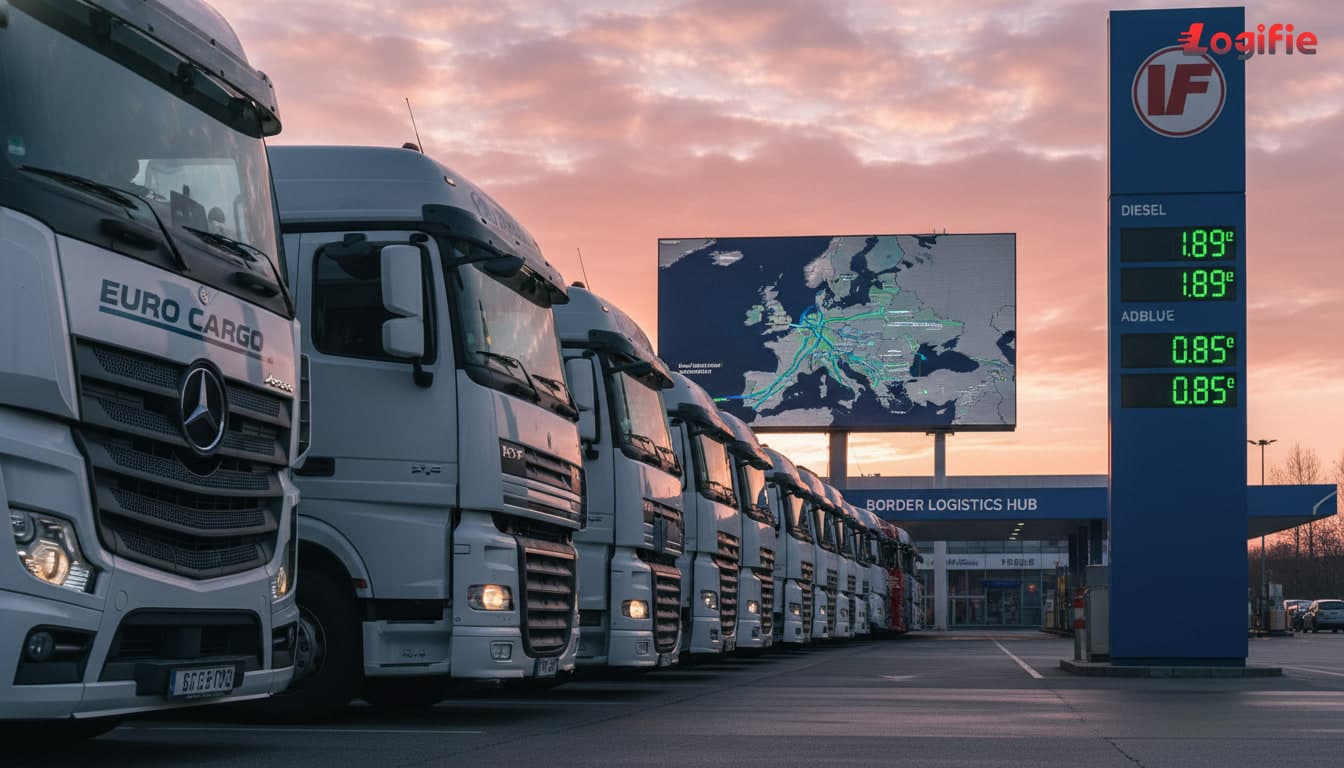
Central Europe corridor triangle where the 2026 diesel shock hit border fuelling patterns hardest
The policy debate is moving in the right direction, but operators still need their own contingency logic. State relief may come later; lane discipline, carrier diversification, and live cost visibility matter today.
Action Checklist for Shippers, Forwarders, and Fleet Managers
Teams that move early will protect service better than teams that wait for a full policy reset. The right response combines commercial changes, corridor redesign, and better use of live freight visibility across every high-risk lane.
- Audit every surcharge clause and shorten review windows wherever diesel now moves faster than contract mechanics.
- Map alternate fuelling plans for Germany-Poland and Poland-Slovakia lanes instead of relying on one familiar border stop.
- Track diesel changes daily through Logifie's fuel pages for key markets such as Germany, Poland, France, and Spain.
- Stress-test carrier solvency and diversify away from fleets that cannot absorb even short delays in surcharge recovery.
- Add ETA buffers on corridors where customs checks and station queues can break tightly sequenced dock slots.
- Use holiday planning via country-level calendars to avoid stacking fuel stress on top of statutory movement constraints.
- Document all abnormal fuel spend so any future state-aid or relief mechanism can be claimed with defensible evidence.
- Re-price critical lanes early instead of waiting for spot-market dislocation to force rushed decisions.
FAQ
How are European fuel prices affecting road freight costs in 2026?
Diesel inflation is hitting road freight harder than many other cost items because fuel already represents about one third of operating cost. With margins often sitting at 1-3%, a thirty-plus-percent fuel jump can erase profitability before contract formulas update.
What is the EU doing about the diesel fuel crisis?
The current response is mixed. The European Commission moved quickly against Slovakia's discriminatory pricing rule, while the IRU is pressing for coordinated transport-minister action, tax flexibility, and wider crisis support.
Why are drivers crossing borders for cheaper fuel in Europe?
Because the price gap became large enough to justify detours. When a truck can save EUR 250-EUR 300 per refill, cross-border arbitrage stops being opportunistic behaviour and becomes a systematic traffic pattern that drains border-region stations.
Conclusion: Fuel Volatility Is Now a Corridor Design Variable
The EU fuel crisis road freight 2026 story shows that fuel volatility now shapes not just cost but network design, carrier resilience, and the credibility of service commitments. Teams that combine fuel monitoring , tracking , and stronger booking discipline will navigate the next phase of the crisis better than teams treating it as a short-term surcharge problem.
EU says illegal for Slovakia to charge foreigners more for diesel
Polish carriers cut jobs as fuel costs hit record highs
Slovakia says No to cross-border fuel tourism and limits fuel sales
Germans flock to Poland to buy cheaper fuel
IRU urges EU action to keep logistics moving
IRU calls for urgent EU transport minister action on fuel crisis
IEA agrees to release 400 million barrels of oil from strategic reserves
Petrol carousel: Germans go to Poland, Poles go to Slovakia
Central Europe Fuel Limits Hit Cross-Border Drives

